■ CYCLE 1 fellow — SS 26
ARMAAN MUMTAZ
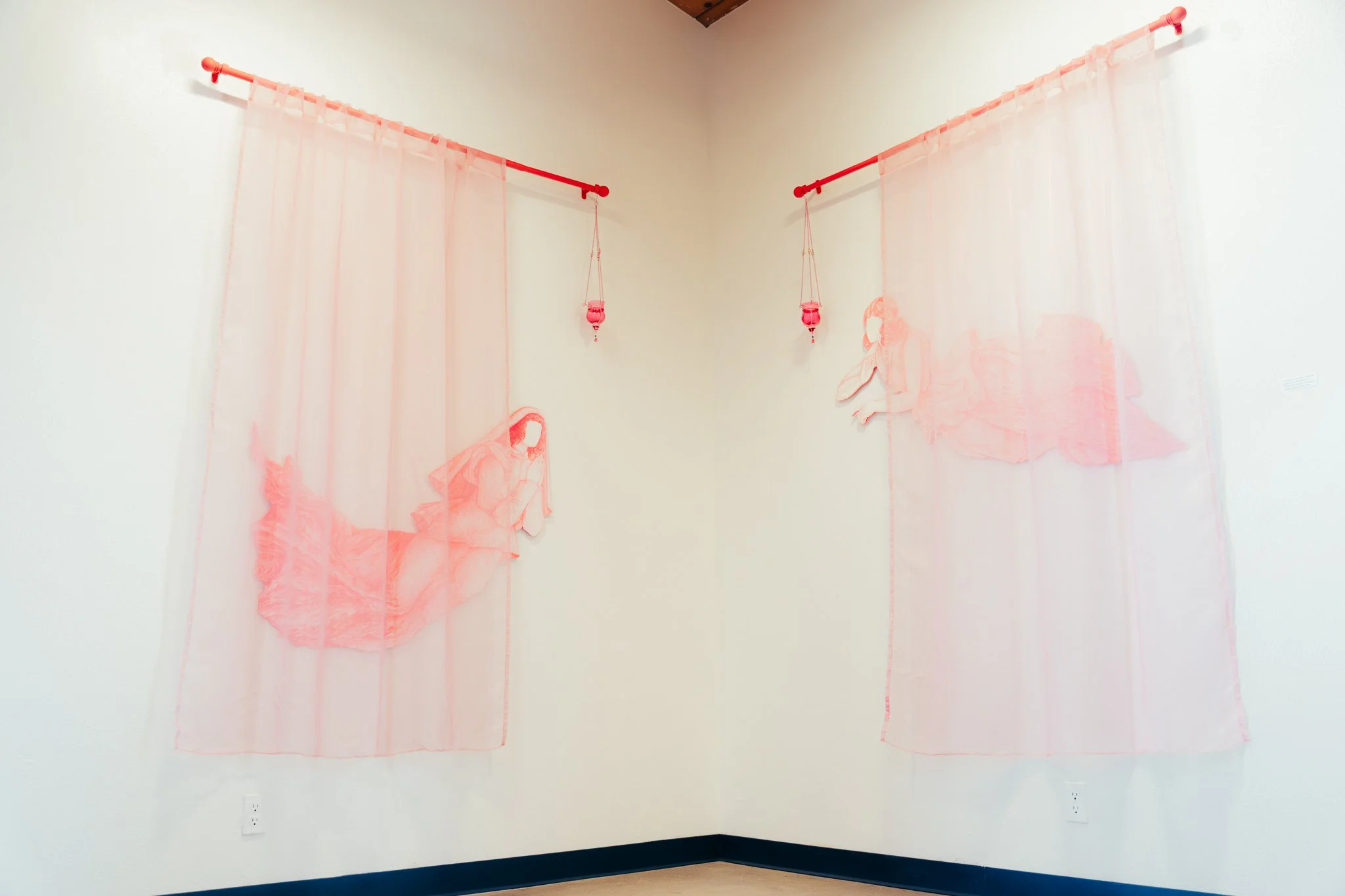
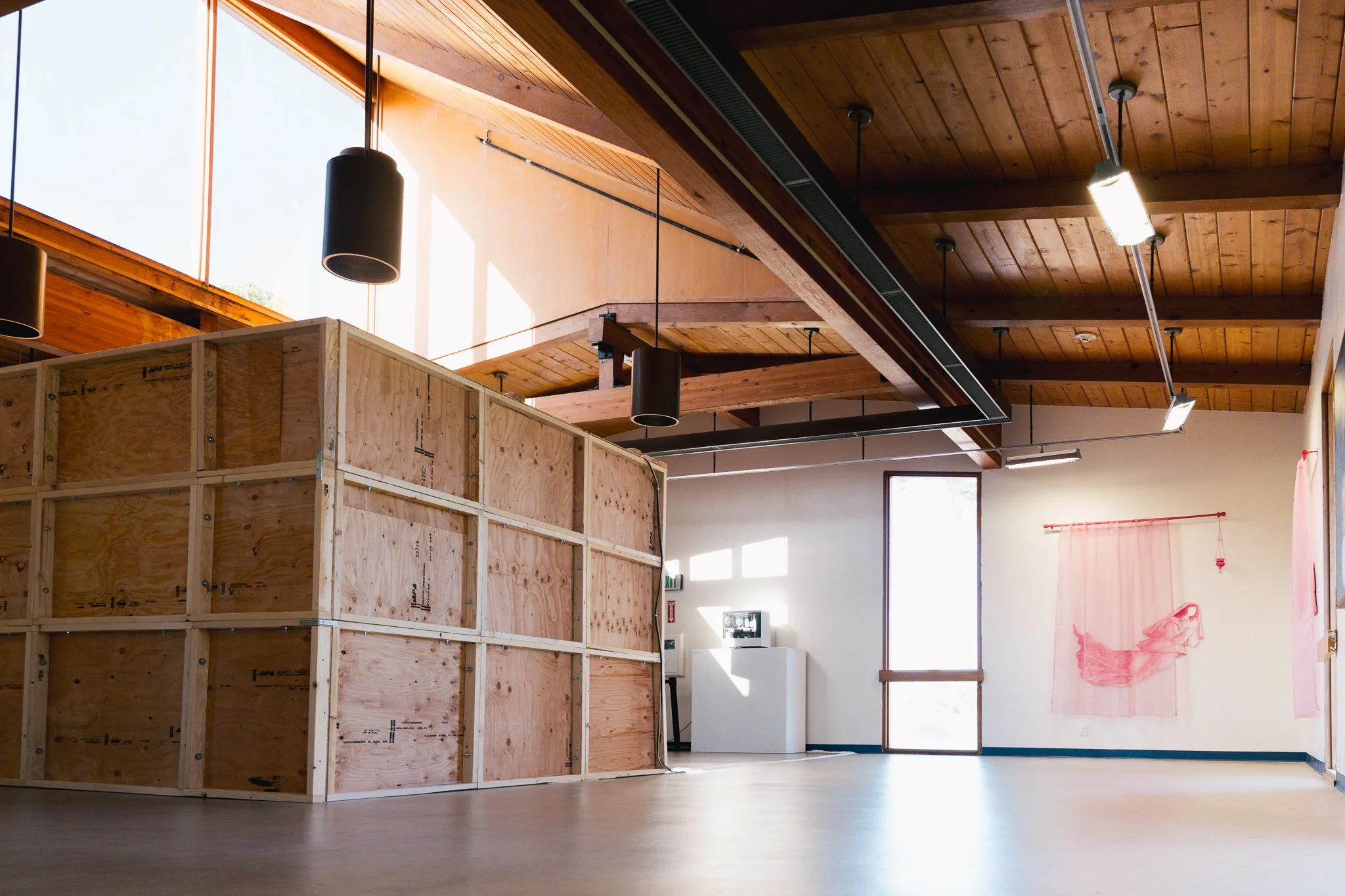
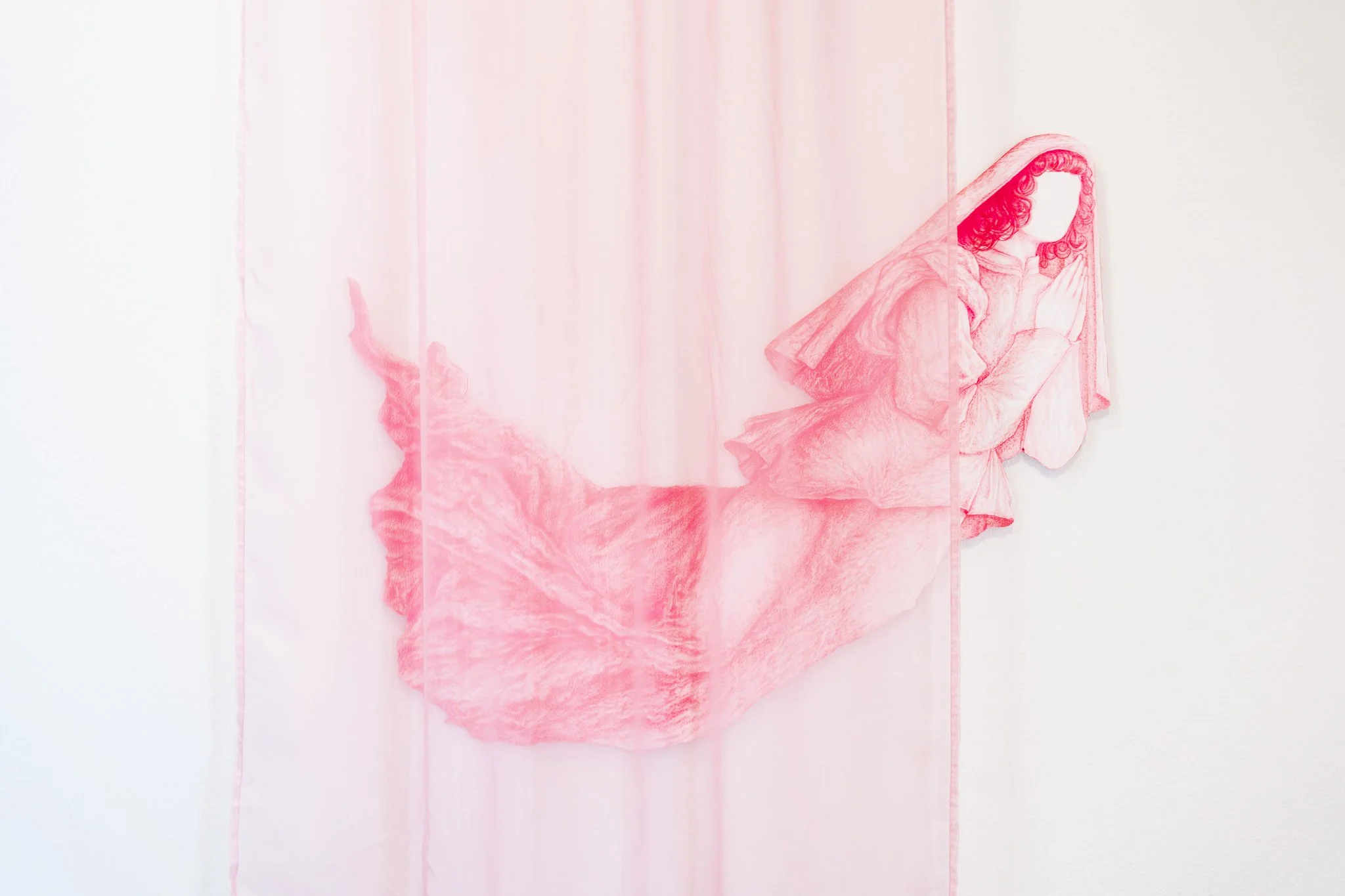
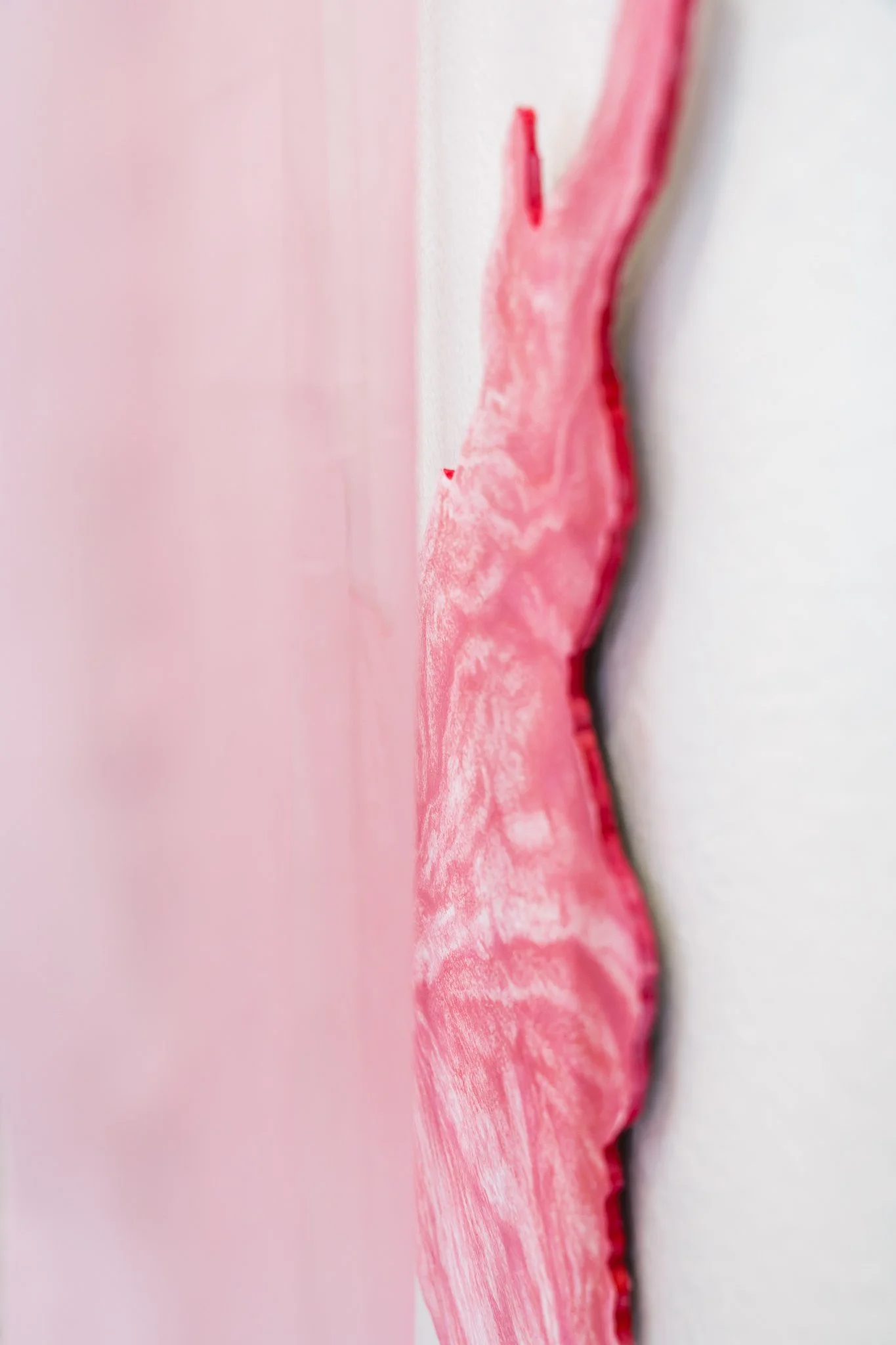
The Thinning of the Veil (or, The Angels Appeared in a Form Most Familiar) is an installation of textile and paper that articulates the origins of Mumtaz’s central exercise in faith-making, ultimately offering a widely applicable framework for self-canonization.
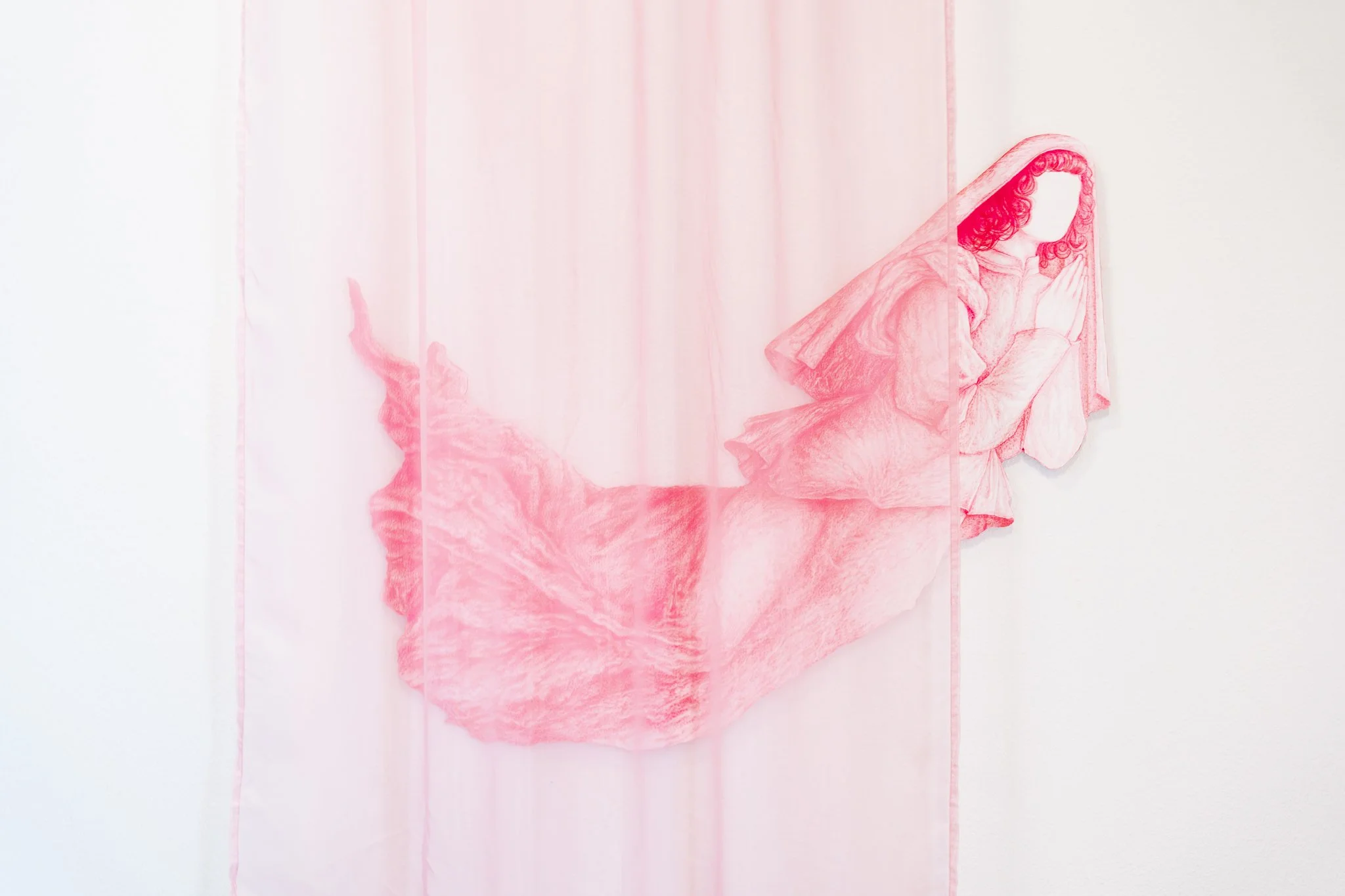
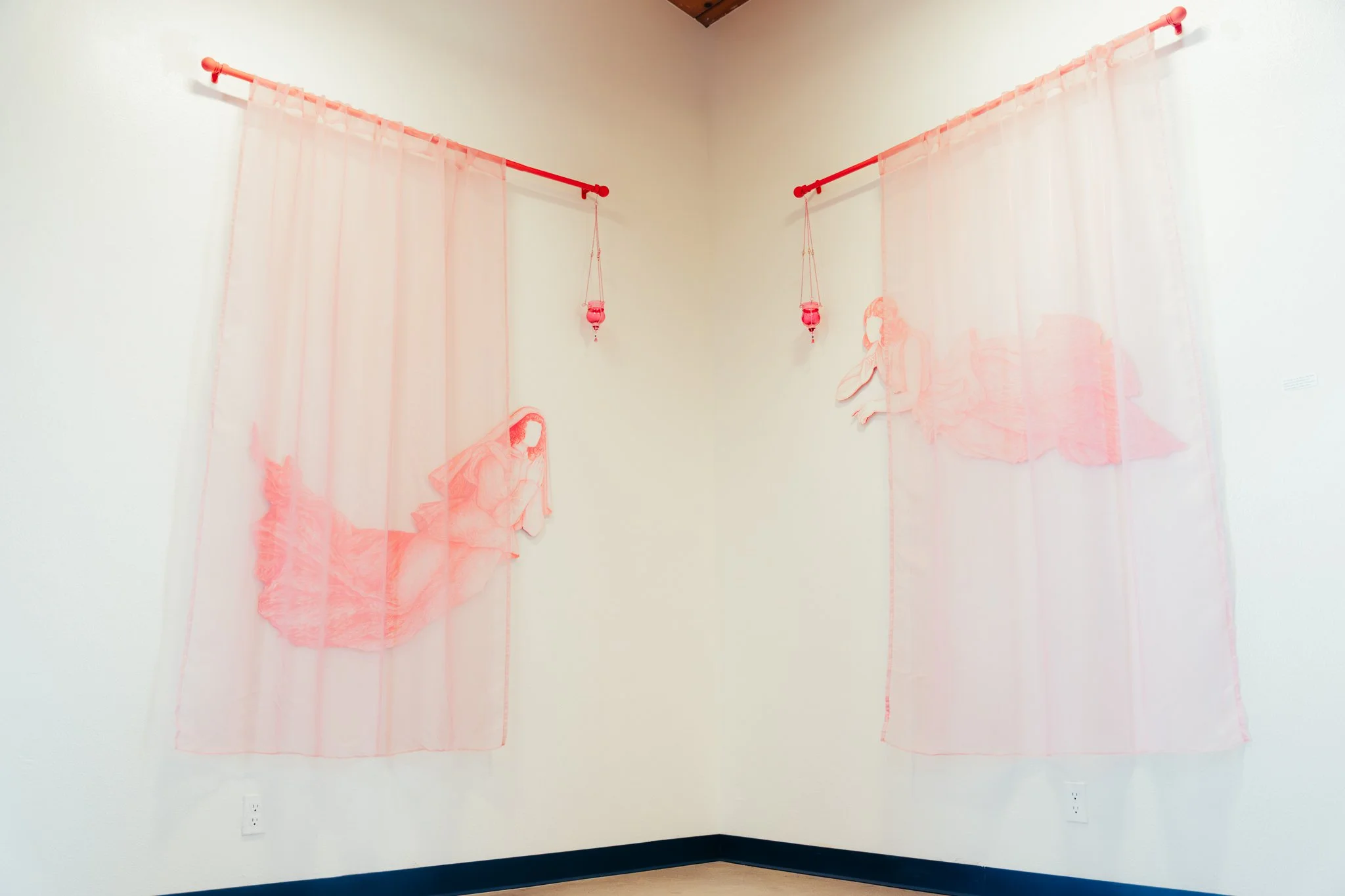
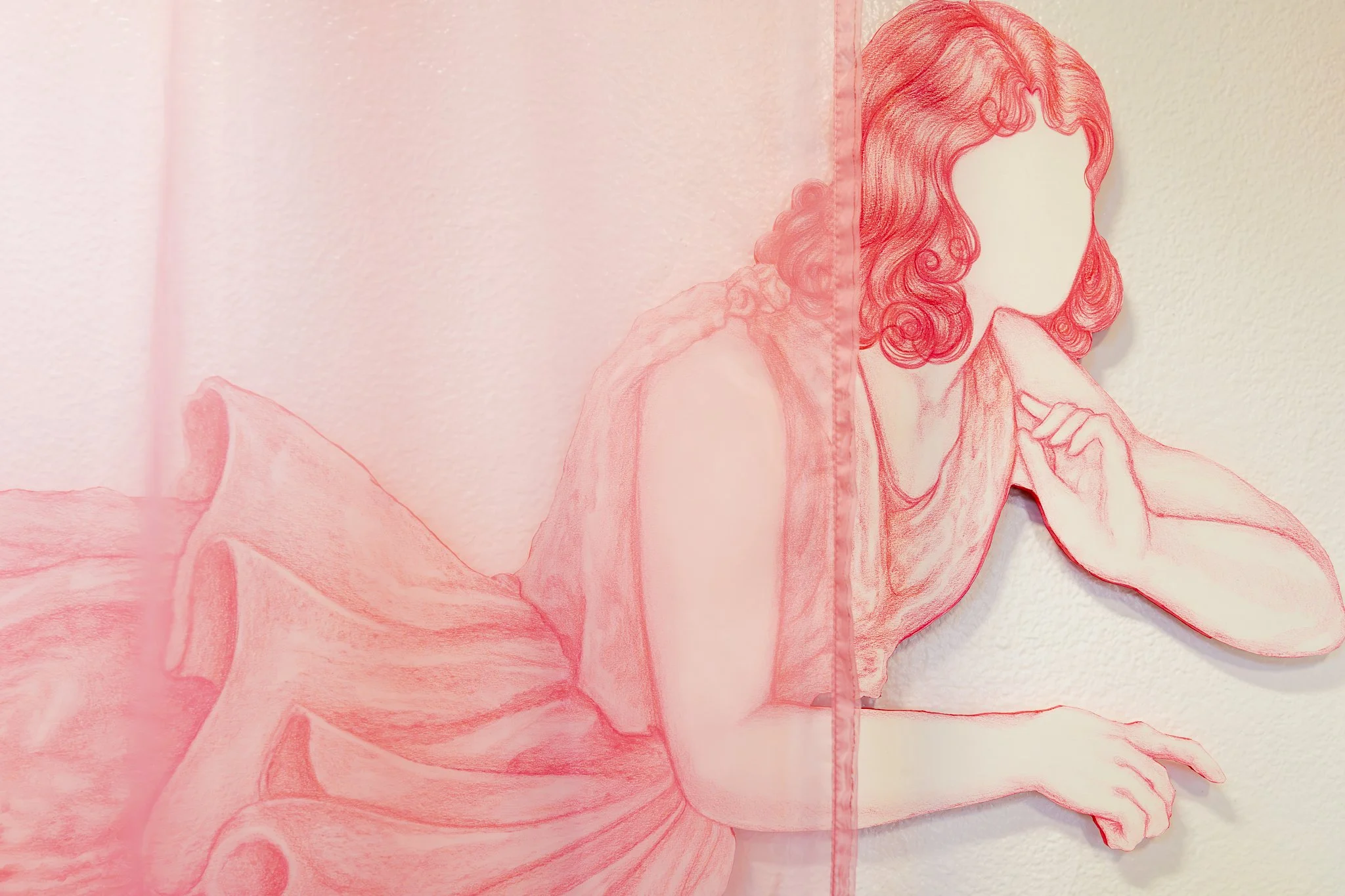
Mumtaz calls to the gallery two ‘Angels,’ fabric-adorned and faceless in vivid pink, as drawn paper cutouts flush against the wall. Sheer curtains of a similar hue are all that stand between the viewer and these apparitions, functioning as a type of scrying technology or revelatory threshold. Curtains emerge from a recurring interest in fabric as the primary apparatus for visualizing inner worlds and projecting fantasy onto the mundane.
The forms of the deities, and the material revealing them, belong to a mythology that correlates to Mumtaz’s instinctive nature. Femininity, sanctified synthetics, indulgent draperies, and affinity for historical glamour inform the seraphic constructions as they did Mumtaz’s early worldview.
The work offers a heretofore unseen creation myth for the nameless, speculative religion buttressing Mumtaz’s practice, born of a reclamatory attempt to enshrine the awkward limbo betwixt Islam, Catholicism, and Queerness.
By presently making real the imagined escapism of their younger self, Mumtaz honors these foundational fascinations with religious gravity, forging an alternative process of canonization. With The Thinning of the Veil, Mumtaz closes the supra-temporal loop between past and present self by fulfilling the prophecy of their own survival. Through fibers and markings, the work actualizes the imagined guardians once summoned in times of crisis, so they may journey back to when they were needed most.
Acting as a manual for repurposing schematics of faith, the work asks: What would it mean to afford yourself the freedom to mythologize your memory? If you let yourself stare for long enough, what would appear behind the curtain?
THE THINNING OF THE VEIL
an interview with the artist
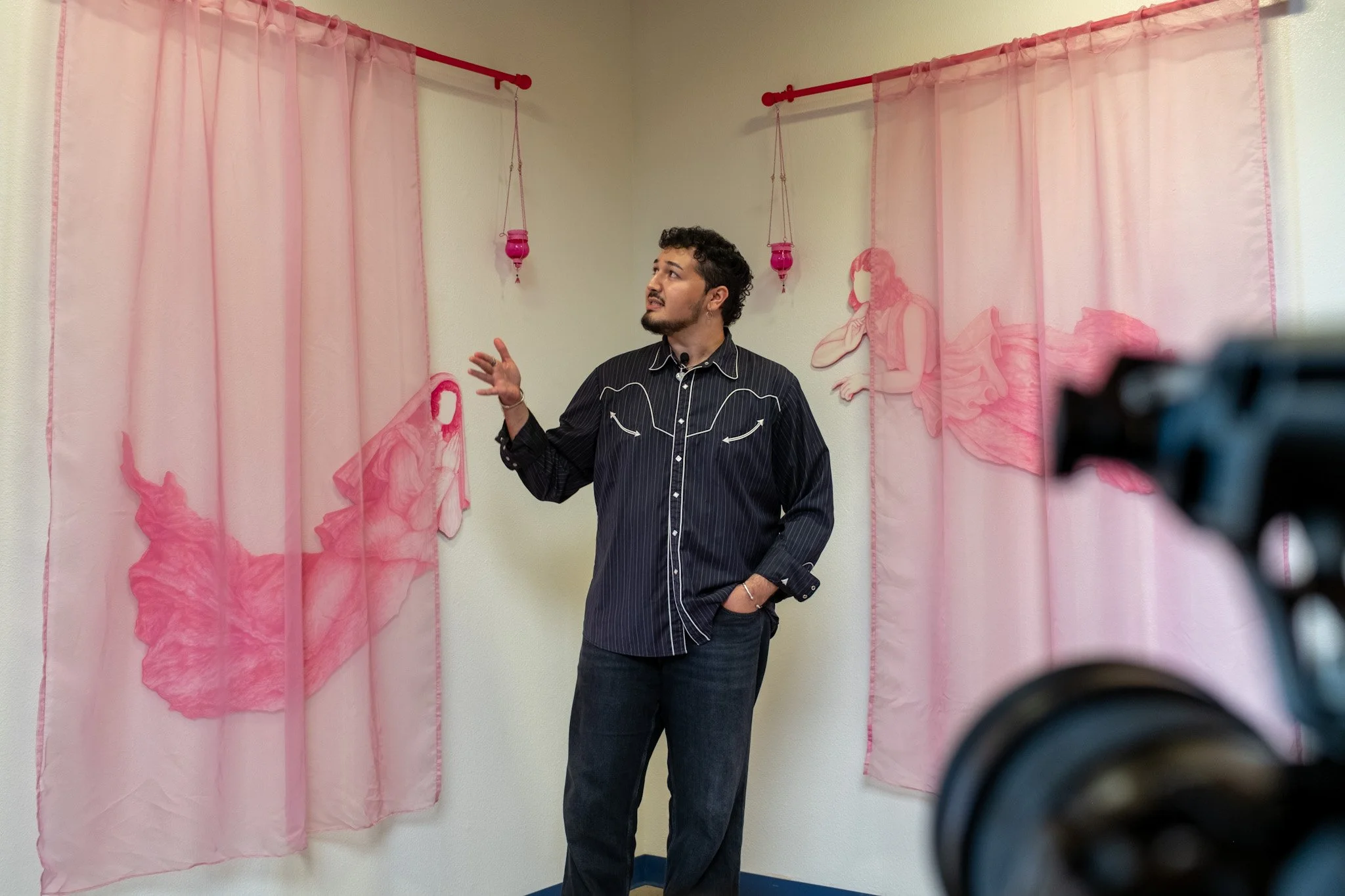
Armaan Mumtaz’s practice calls upon drawing as the active apparatus for lending physical form to otherwise imagined apparitions. Focused on the compounding overlap of in-betweens, Mumtaz’s installations bring naturally unseen deities into disrupted view using rudimentary materials and partial obfuscations, instating a curious relational tension between the viewer and their would-be angels. The work conceptually emerges from an endeavor to visualize the cavity between faith, temporality, and identity.
ARMAAN MUMTAZ
*
ARMAAN MUMTAZ *
Dealing in ideological softness and aesthetic intensity, their drawings wield technique and scale to create spectres of ominous formal elegance, while jarring color choice and synthetic materiality invoke camp sensibilities to problematize notions of tradition and beauty. Repurposing religious frameworks as personal narrative devices escalates this dissonance, affording scriptural magnitude to lived reality.
Often monochrome and fabric-clad, Mumtaz’s forms become legible as two-dimensional tableaus. These flattened vignettes utilize recurring archetypes that function as fantastical mirrors for Mumtaz’s experiences. Early-life fixations and psychosomatic memory become the fodder for speculative creation myths and prophetic revelations, as paper effigies provide veiled looks upon the characters at play.
Within these neo-scriptural narratives, Mumtaz outlines a possibility for new kinds of affirmation—where the self can be a sacred thing, and a life can be mythologized in the image of one’s fascination.
*