CYCLE 3
. *
SPRING/SUMMER 2026 FELLOWS
. *
CYCLE 3 . * SPRING/SUMMER 2026 FELLOWS . *
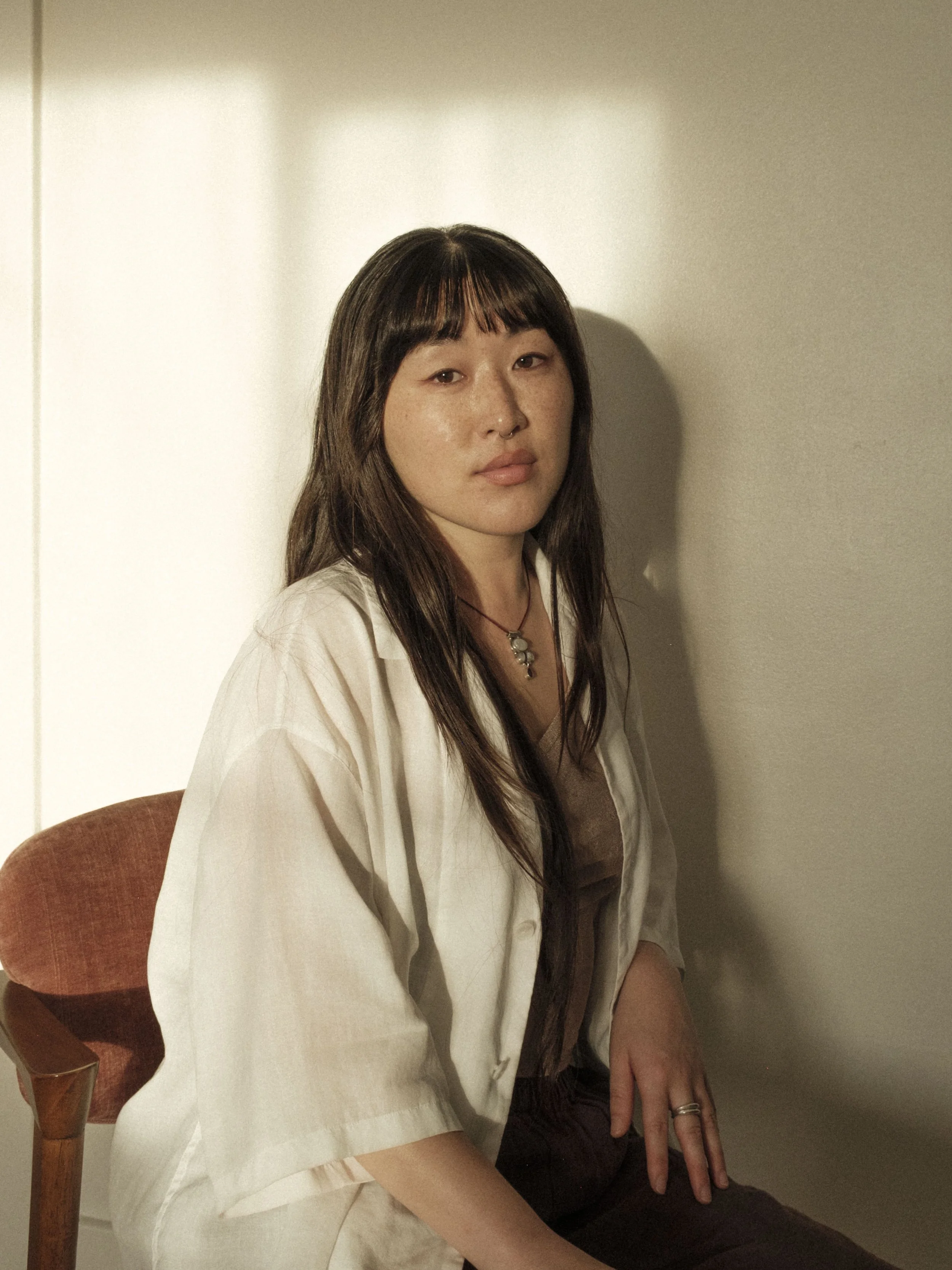
LUCY MU LI
Lucy Mu Li is a Chinese-American interdisciplinary artist working in conversation with Earth. Queer and between cultures, she is drawn to the liminal: the places where skin meets skin, where texture and shared language emerge at the threshold. She situates her ecological position as that of a translator amongst kin—an earth linguist—working across painting, photography, writing, bookmaking, and installation to weave stories of more-than-human kinship and interconnectedness.
With the origins of her practice in drawing and painting, she listens by hand: synthesizing forms across species and bodies into undulating and topographic portals, illuminating life force as a shared intelligence holding us in togetherness. By learning the languages of our more-than-human kin, Li seeks to recover an expanded sense of ecological belonging. Delicate and ephemeral ecologies unfurl into sacred scripture and secret messages as more-than-human vocabularies integrate into her own. Through the cultivation of shared language, we grow porosity: softening the boundaries in between, and opening portals to our shared landscapes as earthly kin.
As a daughter of diaspora, Li relies on the ritual return to land and place as her most essential method. This dialogue between body and Earth is a process of repair—rerooting and reweaving back into the story of Earth. Over the last several years, Li has grown a devotional fieldwork practice across ecosystems in Southern California, the lands and waters of her childhood and her most intimate ecological kin. Using photography and writing as rituals of deep listening, her field notes get below the bedrock of a fragmented collective consciousness to uncover the animate and eternal swimming beneath.
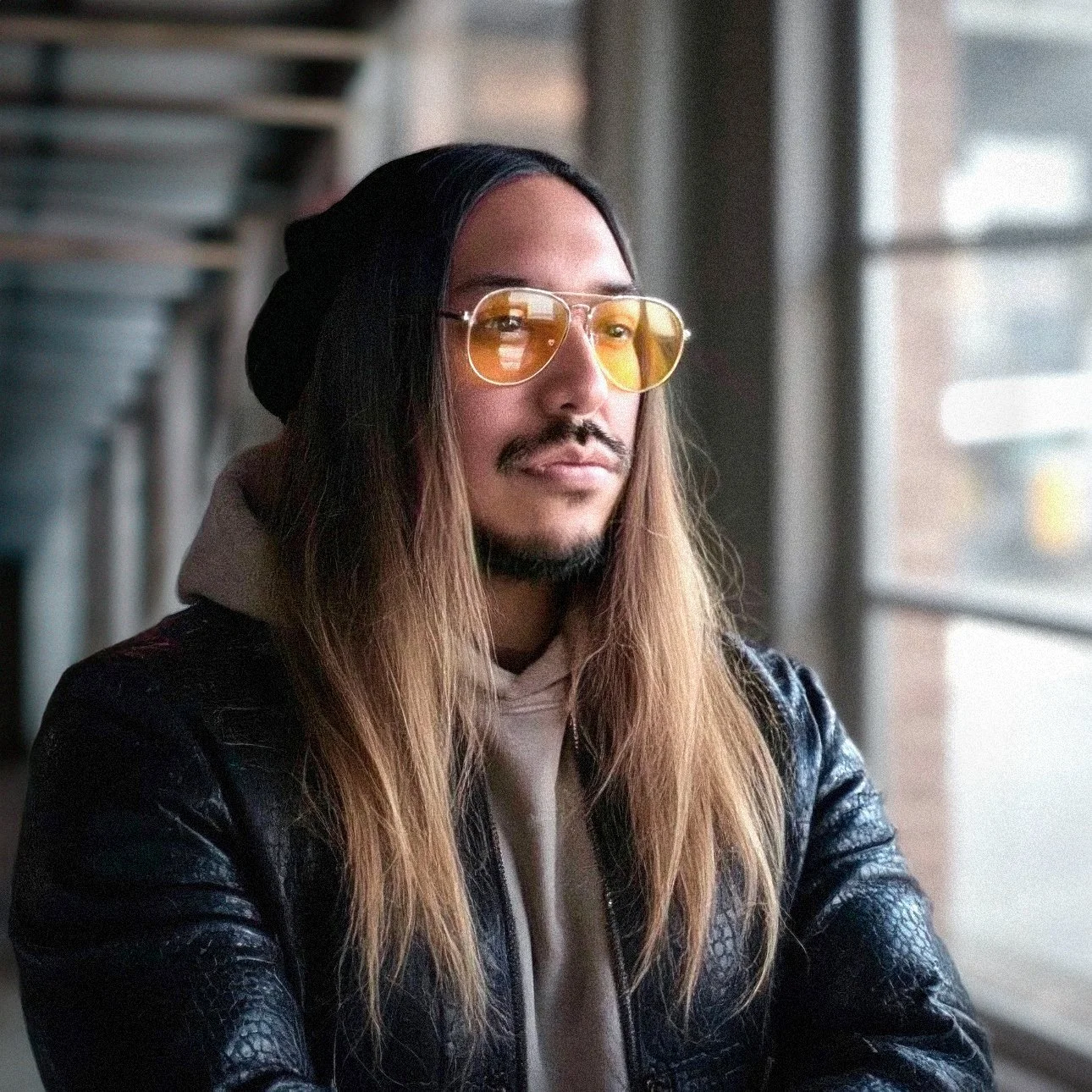
X
X is a multidisciplinary artist whose large-scale, site-specific installations and environments investigate the intersections of spatial politics, deep time, and speculative technology. Converging emerging digital architectures with physical installations, X reconfigures the built environment into a series of living systems. Their work confronts the architectures of erasure, deconstructing space to examine how memory and embodied experience manifest under conditions of ecological and existential precarity.
Advancing concepts of algorithmic sovereignty through the lens of a Coushatta and CHamoru worldview, X’s practice challenges the institutional decoupling of technology from the natural world. Synthesizing a dual background in Architecture (MArch, USC) and Art and Technology (MFA, SAIC), X develops a material language that replaces static colonial structures with fluid, biotic architectures. Functioning as both a conceptual intervention and a technical feat, this work has been exhibited globally—including at Ars Electronica, the Museum of Contemporary Art Chicago, the Field Museum, and the Autry Museum—engineering resilient spatial narratives that bridge deep-time systems with speculative, tech-mediated landscapes.
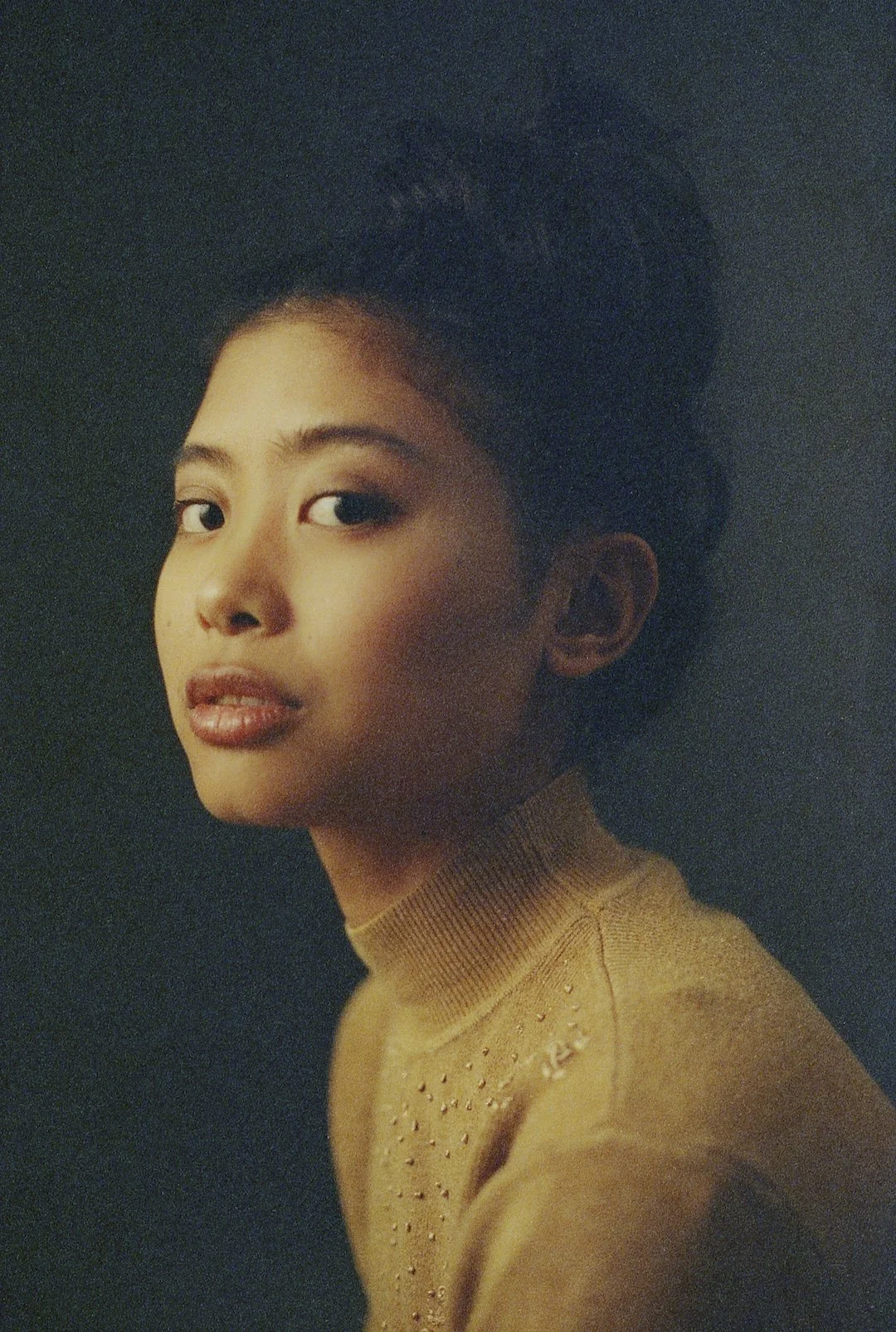
KELSEY BONCATO
Kelsey Boncato — Flowing from my line of disempowered visionaries —femmes who were betrayed, silenced, and hijacked by destructive colonialism— my practice is informed by my ancestral inheritance of clairvoyance and clairsentience as I transmute dream messages from the subterranean into material form. I study the complexities of memory, emotion, and the relationship of others through my on-going dream documentation, investigating the control on what seeps out and what bleeds in. Building my psychic lexicon, I’ve developed my interdisciplinary practice as a devotional commitment around body, water, and dreamwork as ritual.
Exploring the melodious undulation of oil painting, my process starts from below with a red-pink layer as a warm tone —symbolic of blood, a trace shared with the Philippine T’boli dreamweavers’ palette. I softly blend together, caressing and gliding the oil and its pigment, translating details slowly and rhythmically. I summon clarity to the mystique and transcendental imagery that wails to be seen and felt.
I integrate instrumental technologies through the trace of bodily gesture, editing, and projecting video. This stirs my traditional practice with its expansiveness, orchestrating time and space, as I further augment the sensible realm. Altogether, my new works support my embodied research and practice on subconscious synchronicities that question the binds of time —offering release, intuitiveness, and an openness from within.
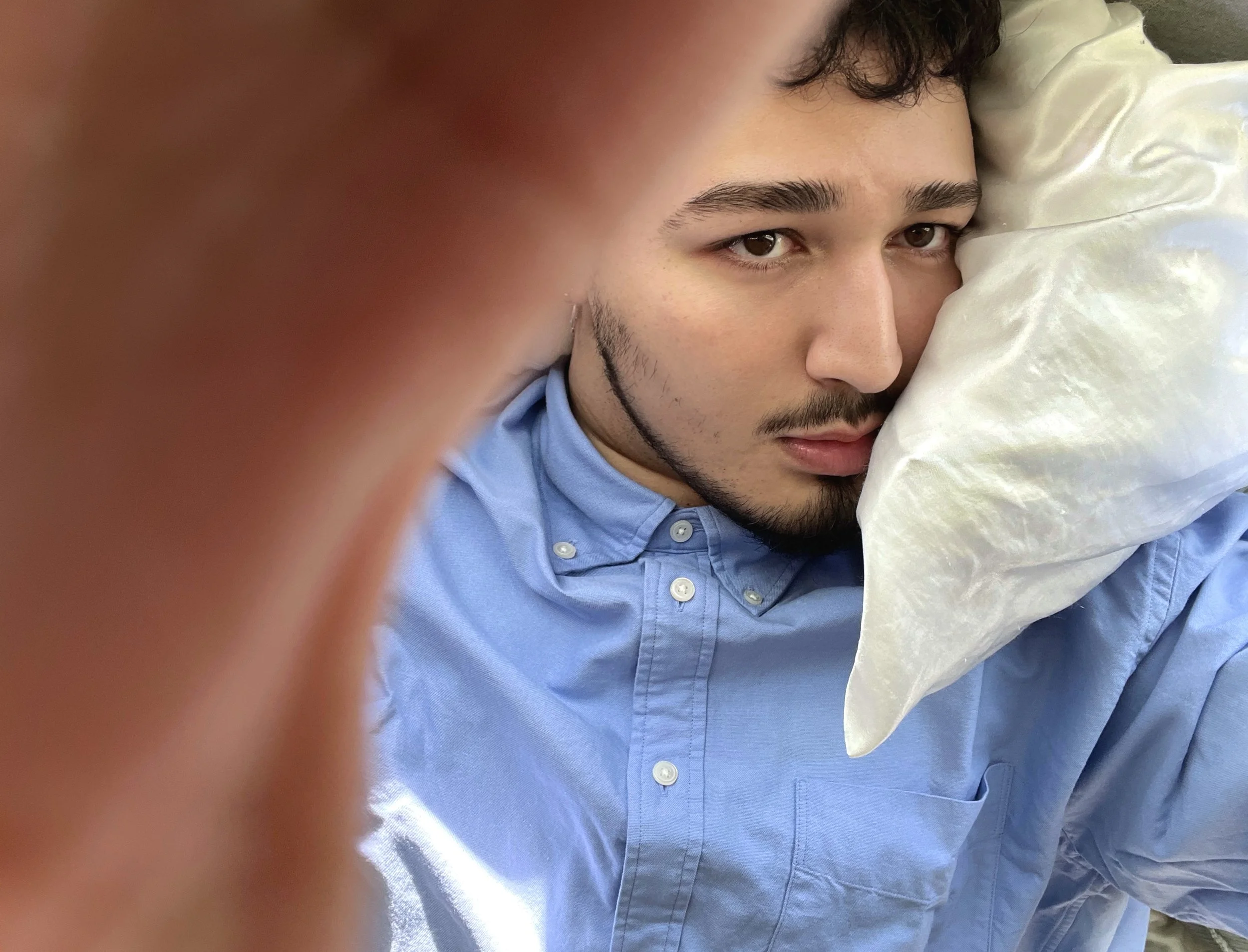
ARMAAN MUMTAZ
Armaan Mumtaz calls upon drawing as the active apparatus for lending physical form to otherwise imagined apparitions. Focused on the compounding overlap of in-betweens, Mumtaz’s installations bring naturally unseen deities into complicated view using rudimentary materials and partial obfuscations, instating a curious relational tension between the viewer and their would-be angels. Foundationally, the work emerges from a conceptual perspective concerned with visualizing a triangular limbo fraught between faith, temporality, and identity.
Dealing in ideological softness and aesthetic intensity, their drawings wield technique and scale to create spectres of ominous formal elegance, while color choice and synthetic mediums invoke camp sensibilities to produce jarring contradictions. This dissonance is escalated by the repurposing of religious frameworks as narrative devices, affording deeply personal retellings the gravity normally reserved for holy texts.
Mumtaz’s fabric-clad, monochromatic forms become legible in the two-dimensional, frequently appearing in flattened vignettes during moments of pensive vulnerability with one another and the viewer. These tablaeus reveal the archetypes of guardian, caretaker, and messenger—each functioning as fantastical mirrors for Mumtaz’s experiences. Early-life fixations and psychosomatic memory become the fodder for speculative creation myths and prophetic revelations, with paper effigies providing veiled looks upon the characters at play.
Within these neo-scriptural narratives, Mumtaz outlines a possibility for new kinds of auto-affirmation—where the self can be a sacred thing, and a life can be mythologized in the image of one’s fascination.